




Introduction
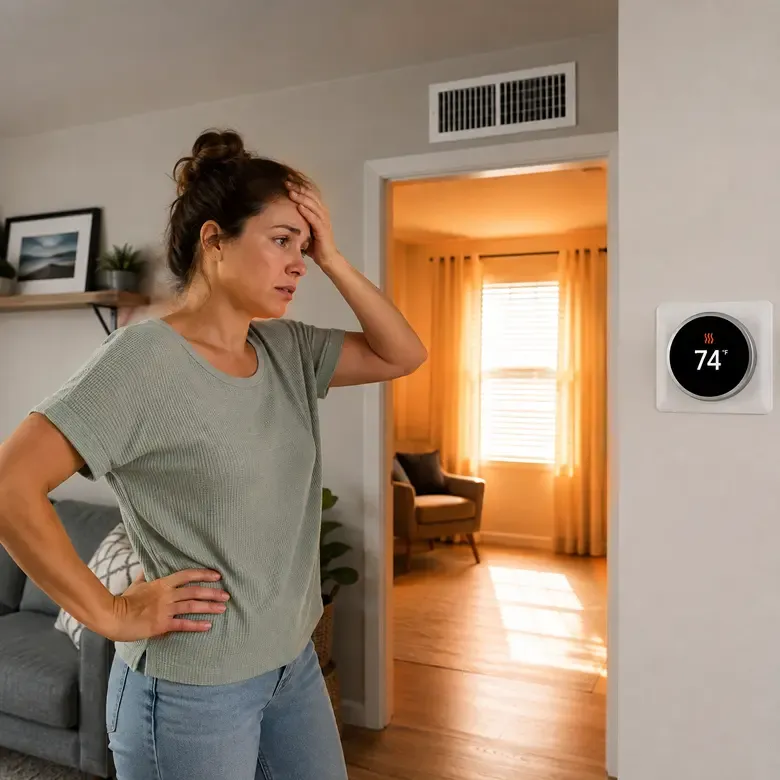
A room that is consistently hotter than the rest of your house can be more than just an annoying comfort issue. Uneven home temperature problems can become noticeable when one bedroom, office, or upstairs room stays warm even when the air conditioner is running and the rest of the home feels comfortable. This often means that the room is not receiving or retaining conditioned air in the same way as other areas of the house.
Several factors can cause uneven temperatures, including blocked vents, restricted airflow, ductwork problems, poor insulation, air leaks, or too much direct sunlight. In some cases, the HVAC system itself may not be properly balanced for the layout of the home. If you need professional HVAC services in Poway, CA, a technician can help identify the underlying cause and recommend the right solution. Understanding the possible causes can help you determine what you can check yourself and when it makes sense to have a professional inspect the system.
1. Blocked or Restricted Air Vents
One of the simplest reasons a room may feel hotter than the rest of your home is a blocked or restricted air vent. Supply vents are designed to deliver conditioned air into the room, but furniture, curtains, rugs, or other objects can limit how much air actually enters the space. Even when the HVAC system is working normally, restricted airflow can leave the room warmer than the areas around it.
Start by checking the vent in the warmer room and make sure it is fully open and not covered by furniture or other items. Also check for dust or debris that may be restricting airflow through the grille. If the vent is clear and open but the room still receives noticeably less air than other rooms, the problem may be deeper in the ductwork or HVAC system and may require professional inspection.
2. Keep AiPoor Airflow to the Room
If one room consistently feels hotter, poor airflow may be preventing enough cooled air from reaching it. This can happen when the ductwork serving the room is restricted, improperly sized, damaged, or has a problem with its connection. A room at the end of a duct run may also receive less airflow than rooms located closer to the HVAC system.
You can compare the airflow from the warmer room’s vent with nearby vents while the system is running. If the air feels noticeably weaker, check that the vent is open and unobstructed. If the airflow remains weak after these basic checks, a professional can inspect the ductwork and HVAC system to determine whether a restriction, leak, or other airflow problem is causing the uneven temperature.
3. Leaky or Damaged Air Ducts
Leaky or damaged air ducts can prevent enough cooled air from reaching the room that needs it most. If a duct has gaps, cracks, disconnected sections, or damaged insulation, conditioned air can escape before it reaches the vent. This can make one room noticeably warmer while the HVAC system continues running to reach the temperature set on the thermostat.
If the warmer room has consistently weak airflow, unusual dust around a vent, or temperature differences that do not improve after basic checks, the ductwork may need attention. Some duct problems are located in areas that are difficult to access, such as attics, crawl spaces, or inside walls. For homeowners in Poway, Oceanside Air Duct Cleaning can provide professional duct inspection to help locate leaks or damage and determine whether the duct needs sealing, repair, or replacement.
4. Poor Insulation in the Room
Poor insulation can make it harder for a room to maintain the temperature created by your HVAC system. If a room does not have enough insulation in its walls, ceiling, or attic area, outdoor heat can transfer inside more easily during warmer months. The cooled air may also escape faster, causing the room to become warmer than other parts of the house.
This problem is especially common in rooms located under an attic, above a garage, or along exterior walls that receive a lot of heat from outside. If the HVAC system is delivering adequate airflow but the room still stays noticeably warmer, uneven home temperature problems may be related to insufficient insulation. A professional home energy or insulation assessment can help determine whether additional insulation is needed to improve temperature consistency.
5. Windows and Doors Letting in Heat
Windows and doors can be a major source of unwanted heat in a room, especially during hot weather. Gaps around frames, worn weatherstripping, or poorly sealed areas can allow warm outdoor air to enter while cooled indoor air escapes. Large windows can also allow significant heat from direct sunlight to build up inside the room.
Check the windows and doors in the warmer room for visible gaps or noticeable drafts around the edges. Keep doors and windows properly closed when the HVAC system is running, and consider using curtains or blinds to reduce direct sunlight during the hottest part of the day. If you find significant gaps or damaged seals, repairing them can help the room hold cooled air more effectively and maintain a more comfortable temperature.
6. Too Much Sunlight During the Day
Direct sunlight can significantly increase the temperature of a room, especially when the room has large windows or receives several hours of afternoon sun. As sunlight passes through the glass, it heats surfaces such as floors, walls, and furniture. The room can then stay warm even while your HVAC system is actively cooling the rest of the house.
Simple changes can help reduce this extra heat. Closing blinds, curtains, or shades during the hottest part of the day can limit the amount of sunlight entering the room. You can also consider energy-efficient window coverings or solar shades for rooms that receive strong, direct sunlight. Reducing the heat entering the room makes it easier for your HVAC system to maintain a comfortable temperature.
7. Problems With the Return Airflow
Return airflow is an important part of how your HVAC system circulates air throughout your home. Return vents pull air from the rooms and send it back to the HVAC system to be cooled or heated again. If the return vent serving a warmer room is blocked, too small, dirty, or unable to draw enough air, the room may not receive balanced airflow and can feel warmer than the rest of the house.
Check that the return vent is open, clean, and free from furniture, curtains, or other obstructions. If the room still feels warmer even though the return vent is clear, there may be an airflow imbalance or another issue within the HVAC system or ductwork. For homeowners in Poway, CA, a professional can inspect the return system and determine whether changes or repairs are needed to improve air circulation.
8. HVAC System Is Not Properly Balanced
An HVAC system should distribute conditioned air throughout your home based on the size and needs of each room. When the system is not properly balanced, uneven home temperature problems can occur because some rooms may receive too much cooled air while others receive too little. This can be especially noticeable in larger homes, multi-story houses, or rooms located far from the main HVAC unit.
If one room consistently stays warmer while other areas are comfortable, check whether its vent is open and receiving adequate airflow. If the basic checks do not solve the problem, the system may need professional balancing. An HVAC technician can evaluate airflow throughout the home and make appropriate adjustments to help distribute conditioned air more evenly.
9. Dirty Air Filter or HVAC Components
A dirty air filter or buildup on important HVAC components can reduce the amount of air your system is able to move through your home. When airflow becomes restricted, certain rooms may receive less conditioned air than others, making them feel warmer even though the HVAC system is running. A clogged filter can also cause the system to work harder and run for longer periods.
Start by checking the air filter and replacing it if it is visibly dirty. If the filter is clean but the room continues to receive weak airflow, there may be dirt or another issue affecting components such as the blower or indoor coil. For homeowners in Poway, CA, these components can be difficult to inspect or clean properly without the right equipment, so persistent airflow problems are best evaluated by an HVAC professional.
10.When to Call a Professional
If one room continues to stay warmer than the rest of your home after checking the vents, air filter, windows, and other simple causes, it may be time to contact an HVAC professional. Persistent temperature differences can point to problems with the ductwork, airflow, insulation, thermostat, or overall HVAC system that may not be easy to identify on your own.
A professional can inspect the system, measure airflow, and look for issues that may be causing the uneven temperatures. Getting the problem checked early can help restore comfort and prevent the HVAC system from working harder than necessary. If you are experiencing ongoing uneven cooling, professional HVAC services in Poway, CA, can help identify the cause and recommend an appropriate solution.
Conclusion
When one room in your house is always hotter than the others, the problem is not necessarily a sign that your entire HVAC system needs to be replaced. Blocked vents, poor airflow, leaky ducts, insufficient insulation, heat from windows, return airflow problems, and dirty HVAC components can all contribute to uneven temperatures.
Start with simple checks such as keeping vents clear, replacing a dirty air filter, and reducing direct sunlight. If the room remains warmer despite these steps, having a professional inspect your HVAC system and ductwork can help identify the underlying problem. Addressing the cause can improve comfort throughout your home while helping your HVAC system operate more effectively.