

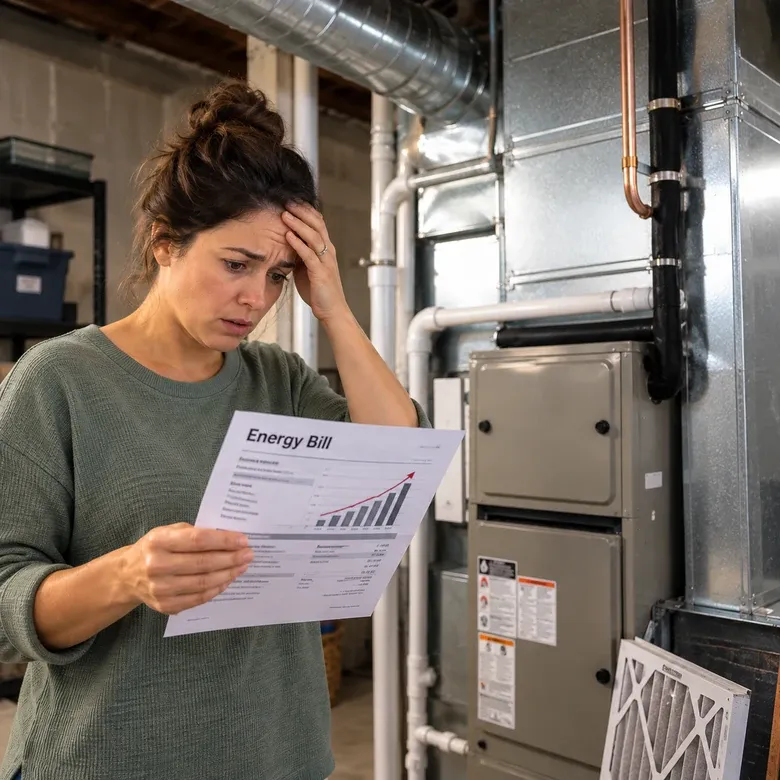
A sudden increase in your HVAC energy bill can be frustrating, especially when your daily heating or cooling habits have not changed. Understanding why HVAC energy bills increase can help you identify whether the change is related to seasonal weather, increased usage, or an HVAC system that is working harder than necessary.
Several factors can contribute to higher HVAC energy bills, including restricted airflow, dirty filters, ductwork problems, thermostat settings, poor maintenance, and aging equipment. For homeowners in Penasquitos, CA, understanding these common HVAC issues can make it easier to recognize changes in system performance. In this guide, we’ll explore the common causes of rising HVAC energy costs and what homeowners can check to help their system operate more efficiently.
Also Read: 8 Preventative HVAC Tips Every Homeowner Should Follow
1. A Dirty or Clogged Air Filter
A dirty or clogged air filter is one of the simplest reasons an HVAC system may start using more energy. As dust and debris build up, the filter can restrict airflow, making it harder for your system to circulate conditioned air throughout your home. This can cause the HVAC system to run longer to maintain the temperature set on your thermostat.
Check your air filter regularly and replace it when it becomes visibly dirty or according to the manufacturer’s recommendations. Keeping the filter clean helps maintain proper airflow, supports efficient HVAC operation, and can also contribute to more consistent indoor comfort.
2. Restricted Airflow
Restricted airflow can make your HVAC system work harder and run longer than necessary, which may contribute to higher energy bills. Airflow problems can occur when vents or return grilles are blocked, air filters become clogged, or there are issues within the ductwork. When conditioned air cannot move freely through your home, the system may struggle to maintain the desired temperature.
Start by making sure furniture, curtains, and other objects are not blocking your vents or return grilles. If airflow remains weak or uneven after these simple checks, there may be a deeper ductwork or equipment issue that requires professional HVAC inspection.
3. Leaky or Damaged Ductwork
Leaky or damaged ductwork can cause your HVAC system to lose conditioned air before it reaches the rooms in your home. Gaps, loose connections, cracks, or damaged insulation can allow heated or cooled air to escape, making your system work longer to maintain the temperature set on your thermostat.
If certain rooms are consistently warmer or colder than others, you notice weak airflow, or your HVAC system seems to run longer than usual, ductwork could be part of the problem. A professional duct inspection can help identify leaks or damaged sections and determine whether repairs are needed to improve airflow and system performance.
4. An Incorrect Thermostat Setting
Your thermostat plays an important role in how often and how long your HVAC system runs. Setting the temperature much higher or lower than necessary can increase heating or cooling demand, causing your system to operate for longer periods and potentially use more energy. For homeowners in Penasquitos, CA, paying attention to thermostat settings can help prevent unnecessary HVAC usage and support more efficient operation. Nick’s Dryer Vent Cleaning can also help homeowners with related home ventilation and airflow concerns that may affect overall system performance.
Check your thermostat settings if you notice a sudden increase in your energy bill. Make sure the temperature is appropriate for your comfort and daily schedule, and avoid making frequent, significant adjustments. If your home still struggles to maintain the selected temperature despite reasonable settings, an HVAC professional can help determine whether another issue is affecting system performance.
5. Extreme Outdoor Temperatures
Extreme outdoor temperatures can naturally increase your HVAC energy usage. During periods of intense heat or cold, your heating or cooling system may need to run for longer periods to maintain a comfortable indoor temperature. This can lead to higher energy bills even when your HVAC system is operating normally, particularly during prolonged periods of extreme weather.
Before assuming there is a problem with your system, compare your current energy usage with previous months that had similar weather conditions. If your energy costs remain unusually high after temperatures return to normal, it may be worth having your HVAC system inspected for efficiency or performance issues.
6. Poor HVAC Maintenance
Regular HVAC maintenance helps keep your heating and cooling system operating efficiently. When routine maintenance is neglected, dust buildup, restricted airflow, worn components, and other developing issues can make the system work harder and run longer to maintain your desired indoor temperature. Over time, this may contribute to increased energy consumption and higher utility bills.
Professional HVAC maintenance can help identify potential problems before they significantly affect system performance. A technician can inspect important components, check airflow, evaluate system operation, and address maintenance needs that may be difficult to identify on your own. Keeping up with routine service can support reliable performance and help your HVAC system operate as intended.
Also Read: How to Improve HVAC Efficiency Without Replacing Your HVAC System
7. An Aging HVAC System
As an HVAC system gets older, its performance may gradually decline due to normal wear and aging components. For homeowners in Penasquitos, CA, an older system may need to run longer to provide the same level of heating or cooling, which can contribute to increased energy consumption. Frequent repairs, inconsistent temperatures, and declining airflow may also appear as the equipment ages.
Age alone does not necessarily mean your HVAC system needs to be replaced. However, if rising energy bills occur alongside frequent breakdowns or reduced performance, a professional inspection can help determine whether maintenance, repairs, or replacement should be considered.
8. Refrigerant or Cooling System Problems
For air conditioning systems, refrigerant or other cooling system problems can affect how effectively your HVAC system removes heat from your home. If the system is not cooling properly, it may run for longer periods while using more energy to reach the temperature set on your thermostat.
If you notice that your air conditioner is running continuously, blowing less-cool air, or struggling to maintain a comfortable indoor temperature, it may need professional attention. Refrigerant issues and cooling system repairs should be handled by a qualified HVAC technician who can inspect the system and identify the underlying problem.
9. Dirty HVAC Components
Dust and debris can build up on important HVAC components over time, especially when routine maintenance is neglected. Dirty components can reduce airflow and make it harder for your system to transfer or circulate conditioned air effectively. As a result, your HVAC system may need to run longer to maintain the desired indoor temperature, which can increase energy consumption.
Regular professional maintenance can help identify and clean components that may affect system performance. If you notice reduced airflow, longer operating cycles, or rising energy bills without a clear change in usage, having your HVAC system inspected can help determine whether dirt buildup is contributing to the problem.
10. Poor Home Insulation
Poor insulation can make it harder for your home to maintain a comfortable indoor temperature. When insulation is inadequate, heated or cooled air can escape more easily through the attic, walls, floors, or other areas, allowing outdoor temperatures to have a greater effect on your home. Your HVAC system may then need to run longer to maintain the thermostat setting, increasing energy consumption.
If your HVAC system appears to be working normally but your home is still difficult to keep comfortable, insulation may be part of the problem. Checking the attic, exterior walls, and other areas for insufficient or damaged insulation can help identify potential heat loss or heat gain that may be increasing the workload on your HVAC system.
11. Your HVAC System May Be Running Longer Than Normal
If your HVAC system suddenly starts running for longer periods than usual, it may be working harder to maintain the temperature set on your thermostat. Longer run times can be normal during extreme weather, but a noticeable change during typical conditions may indicate an issue affecting system performance or efficiency.
Restricted airflow, a dirty filter, ductwork problems, thermostat issues, poor insulation, or aging equipment can all contribute to longer operating cycles. If your HVAC system in Penasquitos, CA continues to run longer than normal and your energy bills are also increasing, a professional inspection can help identify the underlying cause and determine whether service is needed.
How to Find Out Why Your Energy Bill Increased
If you notice a sudden increase in your energy bill, start with a few simple checks:
- Compare your current bill with previous months.
- Check whether outdoor temperatures have changed significantly.
- Inspect your HVAC air filter and replace it if needed.
- Make sure supply and return vents are clear and unobstructed.
- Review your thermostat settings.
- Pay attention to unusually long or frequent HVAC cycles.
- Check whether certain rooms are consistently too warm or too cold.
- Consider whether your household’s heating or cooling usage has changed.
- Schedule professional HVAC service if the increase continues without an obvious explanation.
These steps can help you determine whether the higher energy bill is related to seasonal weather, changes in household usage, or a potential HVAC performance issue. If the increase continues, professional inspection can help identify problems that may be affecting your system’s efficiency.
When Should You Call an HVAC Professional?
A higher energy bill does not automatically mean your HVAC system needs repair. However, professional service may be appropriate if the increase occurs alongside other warning signs.
Consider having your system inspected if you notice:
- Unusually long or frequent HVAC cycles
- Weak or inconsistent airflow
- Uneven temperatures between rooms
- Strange noises or odors
- Reduced heating or cooling performance
- Frequent system breakdowns
- A sudden increase that continues despite normal usage
A professional can inspect the equipment and airflow system to determine whether a mechanical, electrical, ductwork, or maintenance issue is contributing to higher energy consumption. Oceanside Air Duct Cleaning can help homeowners identify airflow and ventilation issues that may be affecting HVAC performance.
Final Thoughts
A sudden increase in your HVAC energy bill can have several possible causes, from extreme weather and changes in household usage to dirty filters, restricted airflow, ductwork problems, poor insulation, and aging equipment. Paying attention to changes in your HVAC system’s performance can help you identify potential issues before they lead to higher energy costs or more significant problems.
Simple maintenance steps, regular filter changes, and keeping vents clear can support efficient HVAC operation. If your energy bills continue to rise without an obvious explanation, professional HVAC service in Oceanside can help identify the underlying cause and keep your system operating reliably and efficiently.